Park Güell sits on Carmel Hill, above Gràcia. Bus 24 from Plaça de Catalunya, or the escalators up from Vallcarca on the L3, put you at the side gate. The monumental zone — the mosaic bench, the hypostyle hall, the dragon — is a timed ticket. The rest of the park is free and still has the views. Treat the ticketed core as a short circuit, not a morning.
A housing estate that never sold
Eusebi Güell asked Gaudí, in 1900, to lay out a garden city for sixty houses on a bald hill. Buyers never came. Two houses were built. The chapel was never a chapel. By 1914 the project was abandoned, and in 1926 the city opened it as a park. UNESCO listed it in 1984 as part of the Gaudí works. The failure is the history: Barcelona inherited a private fantasy because the market would not pay for it.
The salamander on the stair is trencadís, broken tile set in mortar, a cheap way to clad curves. The undulating bench on the plaça was designed so rainwater sheds into cisterns under the hall of eighty-six columns. The stone viaducts were cut from the hill itself. Nothing here is a church. It is a failed suburb with better ceramics than most palaces.
Why the photograph still works
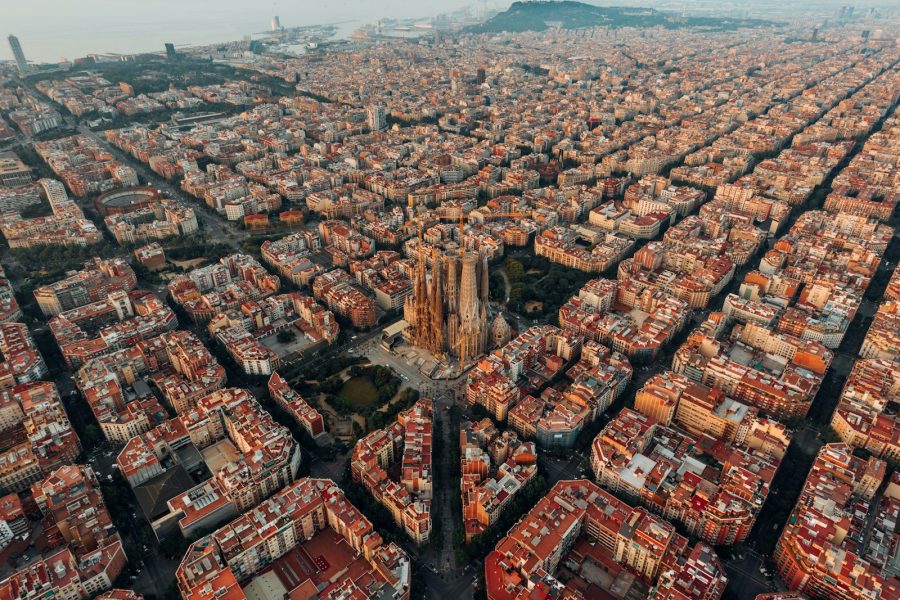
People come for the dragon and the skyline, Sagrada Família in the middle distance, and the idea of Gaudí as a city you can walk. It is popular because it is a garden, not a nave: you can sit, and the light on the tiles changes by the hour. The free park above the monumental zone is quieter and looks the same way west.
It is also popular because Barcelona put it on every itinerary. That is not a reason to skip it. It is a reason to book the first or last slot, not the one that lands with three cruise buses.
If you go
Buy the monumental-zone ticket before you leave the hotel. Do not stack it with Sagrada Família on the same morning; both are slow, both are uphill, and the neighbourhood between them is the actual city. Late afternoon. Exit through the free park toward El Carmel, not back down the same souvenir stair you walked up.