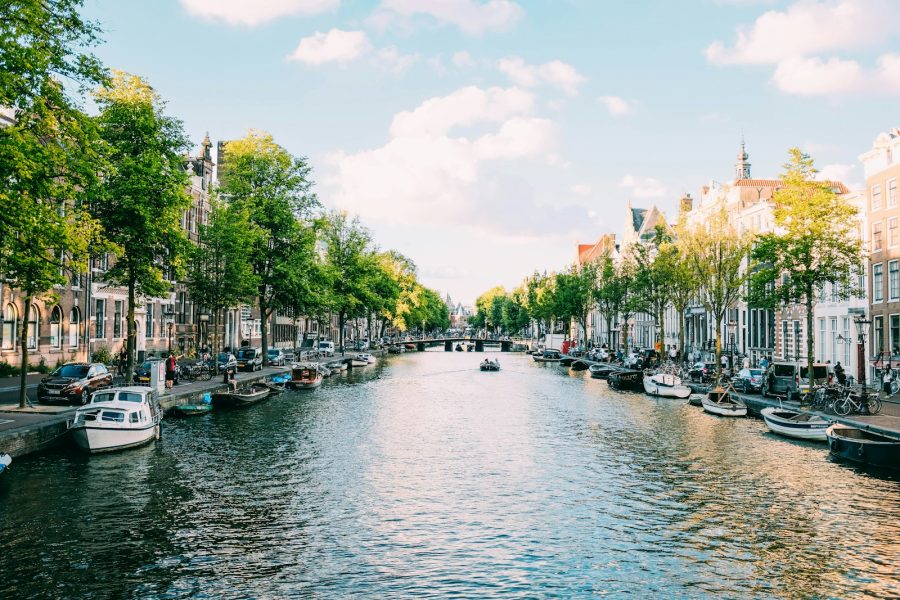
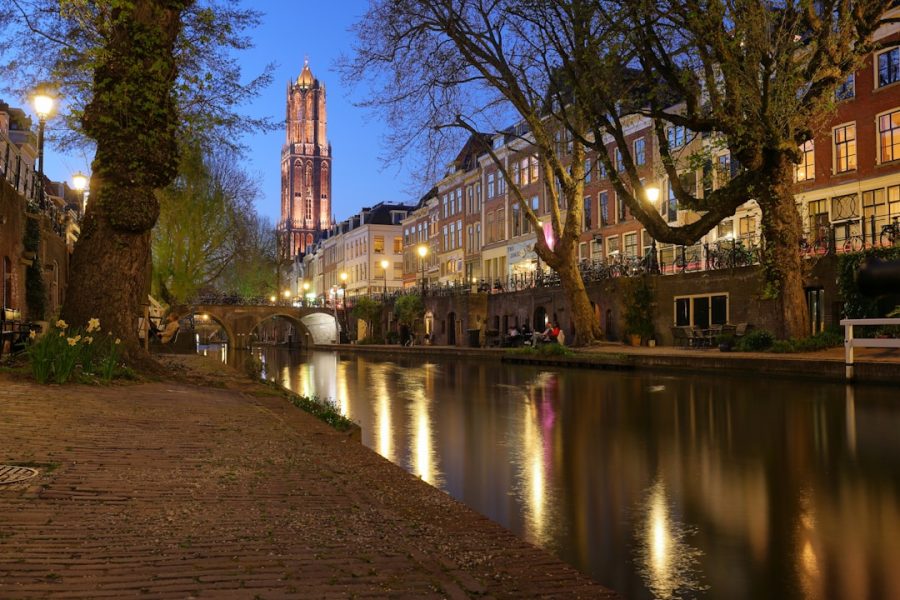
The Anne Frank House sits on the Prinsengracht, a short walk from Westermarkt. You cannot walk in. Tickets release on a schedule, and the circuit is quiet, narrow, and full. The annex is the point. The rest of the museum is context: the business downstairs, the bookcase, the diary in a case, the rooms kept empty on purpose. Amsterdam’s canals are the rest of the day. This is a morning appointment.
A hiding place that became a civic duty
Otto Frank’s business occupied the front. From July 1942 the family and four others lived in the achterhuis, the annex, until betrayal in August 1944. Only Otto survived the camps. He published the diary in 1947. The building was later slated for demolition with the rest of the block; a campaign saved it. The museum opened in 1960 and has been expanding ever since, because the queue never shortened.
The rooms are stripped. That is the curatorial decision, and it is the right one. Photographs on the walls, a map, the height marks on a door. The new wing handles the school groups and the explanations so the annex can stay small. You will be asked not to photograph. Obey it. The canal house next door is still a canal house. The world outside did not pause.
Why the tickets vanish
Because the diary is still read. Because this is the Holocaust site that is also a teenager’s room. Because Amsterdam is a weekend city and this is the one interior people will not skip. It is popular in a way that needs managing: timed entry, no extras, a shop at the end. The popularity is not a failure of taste. It is the book doing what books sometimes still do.
If you go
Book weeks ahead. If there is no ticket, do not queue at the door. Walk the Jordaan instead. The house is a timed slot, not a thing you add because you are on the Prinsengracht. Go in the morning. Leave the afternoon for a canal that does not require a reservation.