Sanssouci sits in Potsdam, 40 minutes on the RE1 from Berlin Hauptbahnhof, then a bus or a walk from Potsdam Charlottenhof or Park Sanssouci. The vineyard terrace and the palace are a timed interior; the park is not. In summer, book the rooms. The rest — fountains, the New Palace at the far end, the Chinese House — is a walk of kilometres. Wear the shoes for that, not for a single rococo circuit.
How a king built a house to not care
Frederick II wanted a place ‘without cares’ after the Silesian wars. Georg Wenzeslaus von Knobelsdorff designed the single-storey palace on a terraced vineyard, finished 1747. It is small on purpose: twelve rooms, a marble hall, a study where Voltaire actually stayed. The king is buried on the terrace, with his dogs, as he asked. The New Palace, much larger, came later as a statement after the Seven Years’ War. UNESCO lists the palaces and parks of Potsdam and Berlin together.
Sanssouci is rococo that stays human-scale. That is why it photographs as a cake and visits as a garden. The Picture Gallery, the Orangery, the Roman Baths: Frederick’s successors kept adding. The park swallowed them.
Why Berlin day-trips here
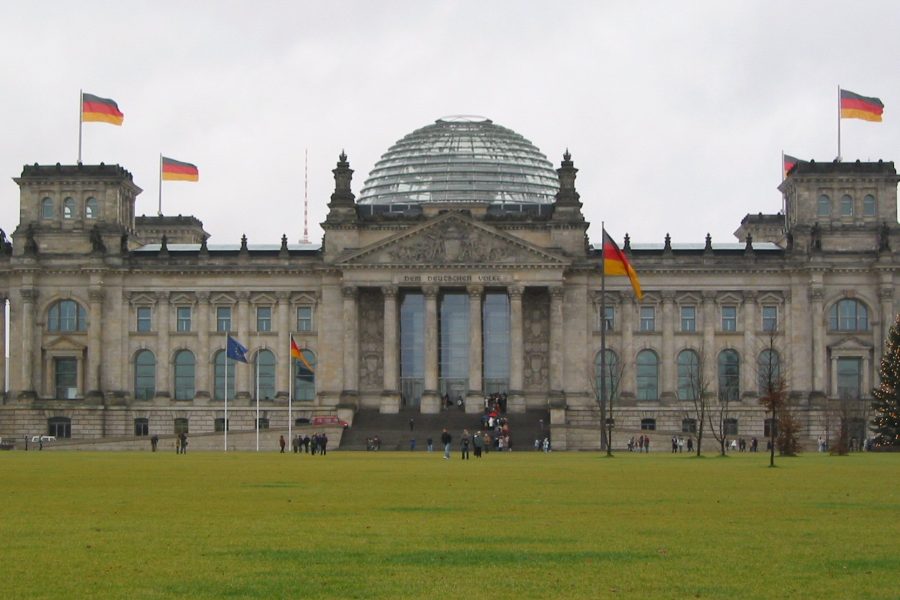
Because it is the anti-Reichstag: no dome queue, a train, and a hill of vines. Search interest follows ‘Potsdam day trip’ as much as the palace name. People come for Frederick, stay for the light on yellow walls, and often never reach the New Palace. Reach it. The contrast is the point — a private house at one end, a show palace at the other, one park.
It is popular because Berliners treat it as a local park that happens to have a king in it. Weekday mornings in shoulder season are the version that still feels like that.
If you go
Do not make it the first thing off a Berlin airport arrival. Combine with the Dutch Quarter in Potsdam town if you have the afternoon. The interior is short; the park is not. Skip the tourist train inside the park unless mobility requires it. Go back on the S-Bahn through Wannsee; the lake is the decompression.