Lisbon and Porto are a train apart, and the Algarve is a different holiday that people add because the country looks small. The Alfa Pendular from Lisbon (Oriente or Santa Apolónia) to Porto Campanhã takes about two hours fifty minutes to a little over three. Intercidades is slower and often cheaper. Both want a seat reservation. Coimbra sits on that line if you want a stop that is neither capital. English is common in the two cities. Portuguese is what a market in the Alentejo actually runs on. Spanish will not reliably do the job, even though the border is close.
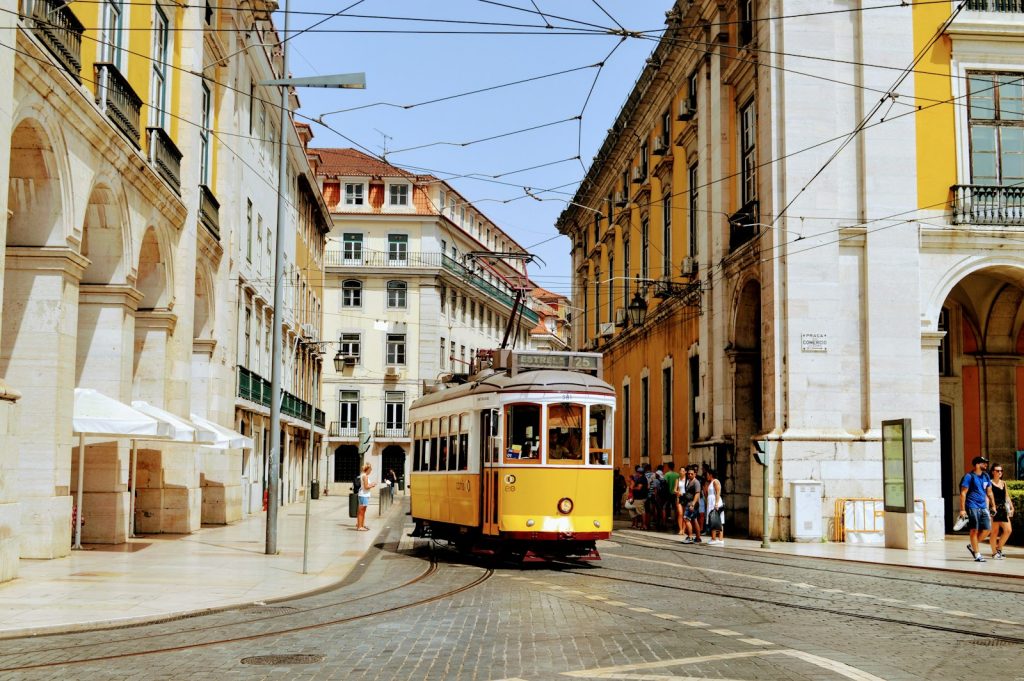
Lisbon is steep. Trams are transport. The river is wide enough to feel like a coast. Porto is granite and another river, with a kitchen that is not a weaker Lisbon. You can do both in a week if the week is for those two and the train. You cannot also do Lagos, a wine estate, and Sintra as a full extra country.
Where the rail map thins
The Alentejo, the west coast north of Porto, and village-to-village days are where a car earns its keep. Lisbon’s centre is a poor place to keep one. Hire for the days you will drive, from an agency that actually sits in the town you need, including the smaller firms that do not have a glowing totem at the airport. Intui is a catalogue of those local rentals. A small car for the week the trains stop being useful is the point. A hire that follows you into Alfama is how you collect a scratch and a parking argument.
August is the Algarve and a Lisbon partly emptied toward it. Winter is wet, cheaper, and a café with steamed windows. Cards work in cities. Coins still help on some trams. One city walked until a viewpoint is ordinary, or a north–south by train with one inland stop: that is a finished visit. The country remains if you skip the other river.
