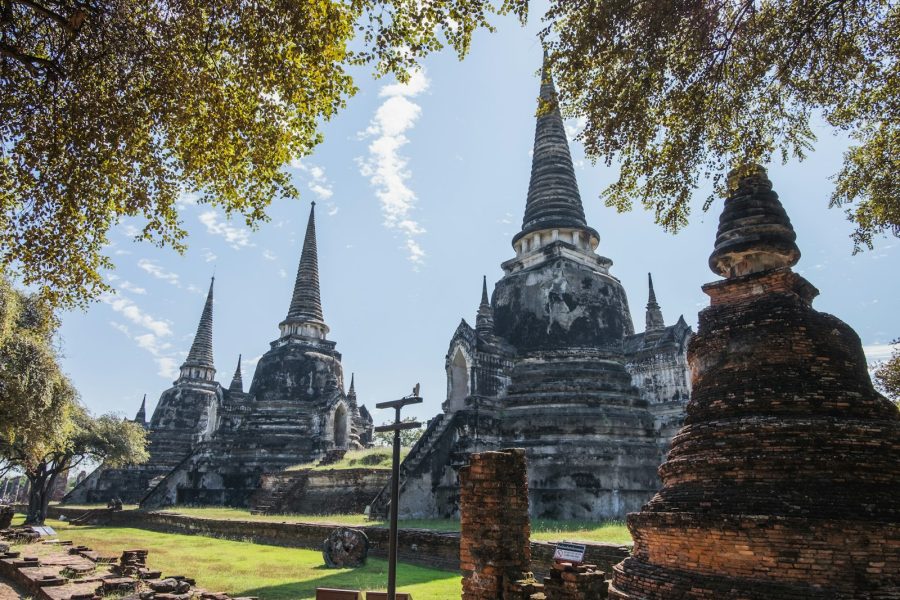
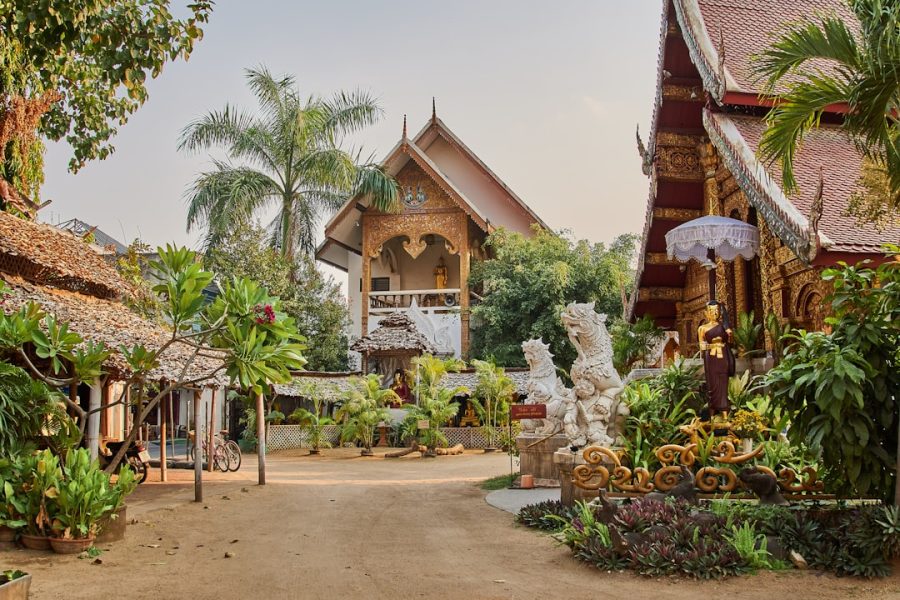
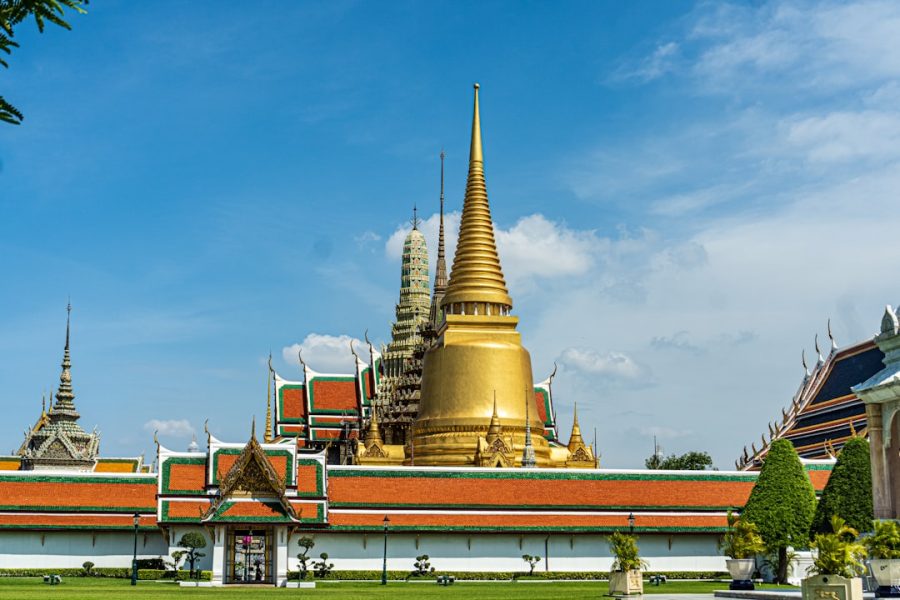
Wat Phra That Doi Suthep sits on the ridge west of Chiang Mai, about 15 kilometres up a winding road. Songthaews leave from the west side of the old town. The naga staircase is the last effort: 306 steps, or a funicular if the knees have already voted. The chedi is gold, and the view is the city in haze. A relic of the Buddha is the official reason the temple is here. The view is why the vans keep coming.
A white elephant and a ridge
The foundation story is 14th century: King Nu Naone of Lan Na followed a white elephant that climbed the mountain, trumpeted, and died. The temple went up on that spot. The present chedi is later, gilded and rebuilt as Lanna fortunes rose and fell. Murals in the cloister tell the Buddha’s life in a cartoon the heat makes hard to linger over. The city below was the Lan Na capital; the mountain was its guardian.
Doi Suthep-Pui is also a national park. The temple is the car park version of the mountain. Trails continue toward the summit and the Hmong village of Doi Pui if you want the ridge without the gold. Most visitors do not. The road is the pilgrimage now.
Why it is the one excursion
Because Chiang Mai’s old town is flat and this is the only skyline that includes the whole basin. Because every guidebook puts it on day one. Because sunset from the terrace is a reliable postcard, haze permitting. It is popular, which means the car park at 4 p.m. is a problem. Morning is the visit. Afternoon is a queue in a songthaew.
If you go
Shoulders and knees covered; a sarong stall at the base will rent you the rest. Chiang Mai’s old town is the walking part of the trip. This is the one excursion that is worth the road. Go in the morning. Combine it with the mountain, not with a cooking class and a night market on the same tired loop.