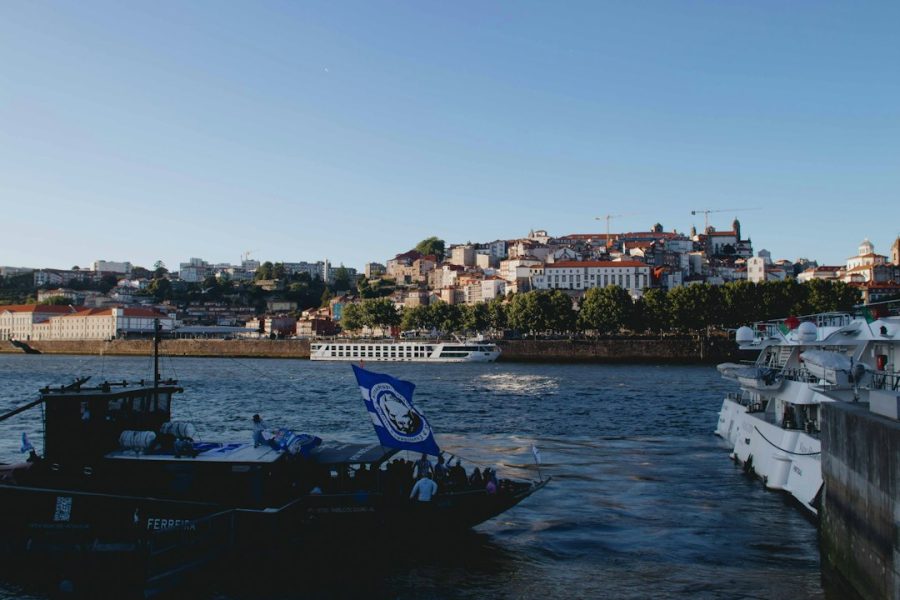
The Douro wine country starts beyond the city, on the line from São Bento or Campanhã toward Régua and Pinhão. The terraces drop to the river in schist walls that are older than the port lodges in Gaia. The quintas are the stops. A day cruise is slower than the train and sees less of the slope. UNESCO listed the Alto Douro wine region in 2001, which is a way of saying the landscape was already the product.
A river that taught Europe fortified wine
The Douro is one of the world’s oldest demarcated wine regions, 1756, under the Marquis of Pombal. Port was a British taste with a Portuguese river: brandy to survive the sea, lodges in Gaia because Porto’s riverbank was the warehouse. Phylloxera, railways, and the later table-wine boom all rewrote the terraces. What you see from the train is labour in stone. The rabelo boats are now decoration. The river is dammed. The wine is not a folklore.
Pinhão is the postcard station with azulejos. Régua is the working town. The quintas that take day visitors are booked like restaurants. Vintage harvest, late September into October, is beautiful and busy. Winter is the valley without the brochure, which is a recommendation.
Why Porto is not enough
Because the lodges in Gaia explain the cellar, not the hill. Because the terraces are the reason the drink exists. Because a train along a river is still one of the better days you can buy in Portugal without a car. It is popular with river-cruise companies, which is why the water is no longer the quiet way. The train remains the honest one.
If you go
Porto’s Ribeira is the photograph of the city. This is the reason the city has port. Do not try to do it in three hours between lunch and a flight. One night upriver is the version that makes sense. Sit on the right-hand side heading east. Come back the other way for the other bank.